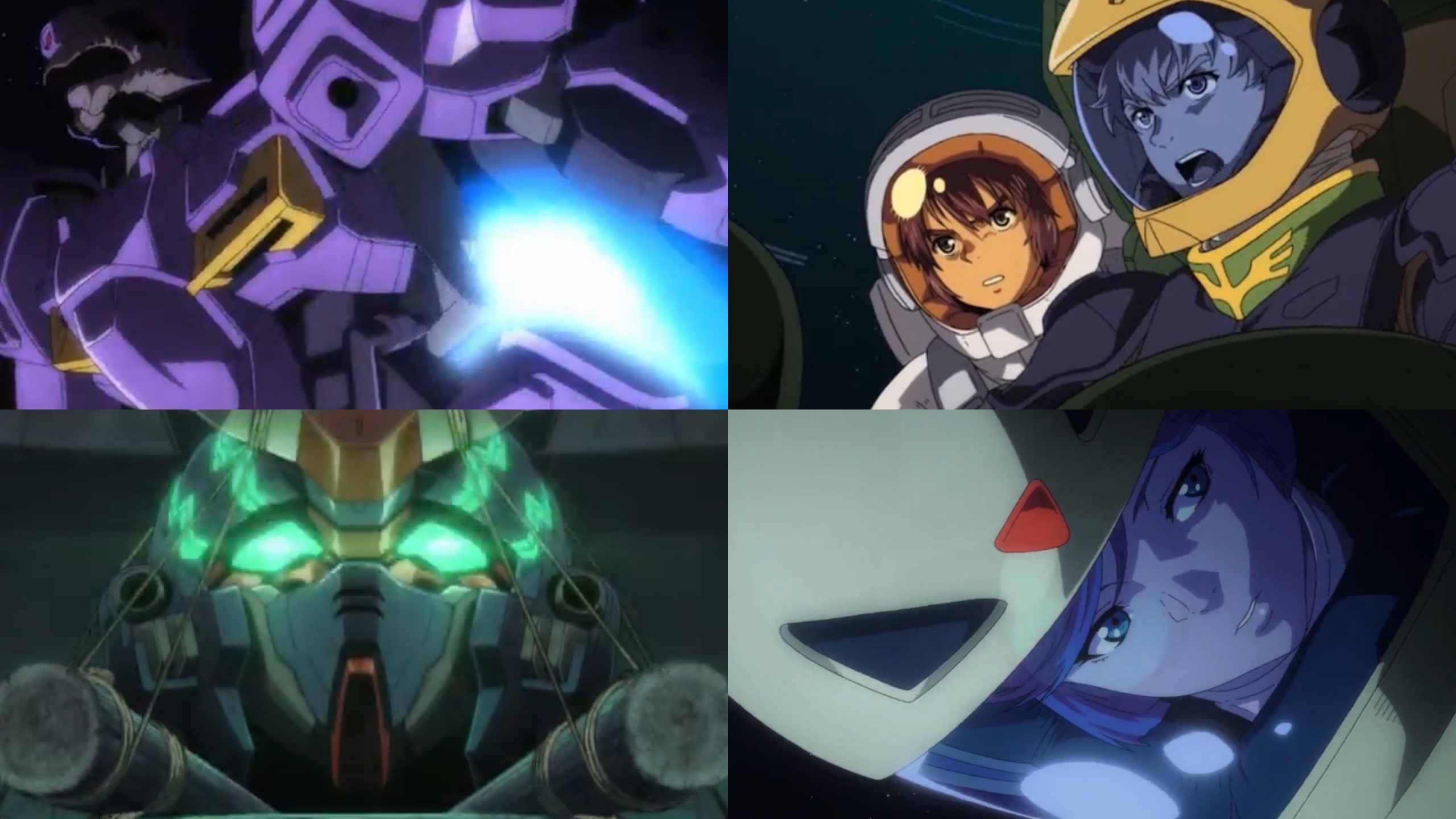



During the production of Mobile Suit Gundam: Hathaway’s Flash, Gundam creator Yoshiyuki Tomino gave director Shukou Murase advice on adapting his novel series, telling him to focus on depicting youth, while also recommending Korean and Hong Kong films as creative inspiration. In Murase’s sophomore Hathaway film, The Witch of Circe, this theme of youth permeates throughout the story.
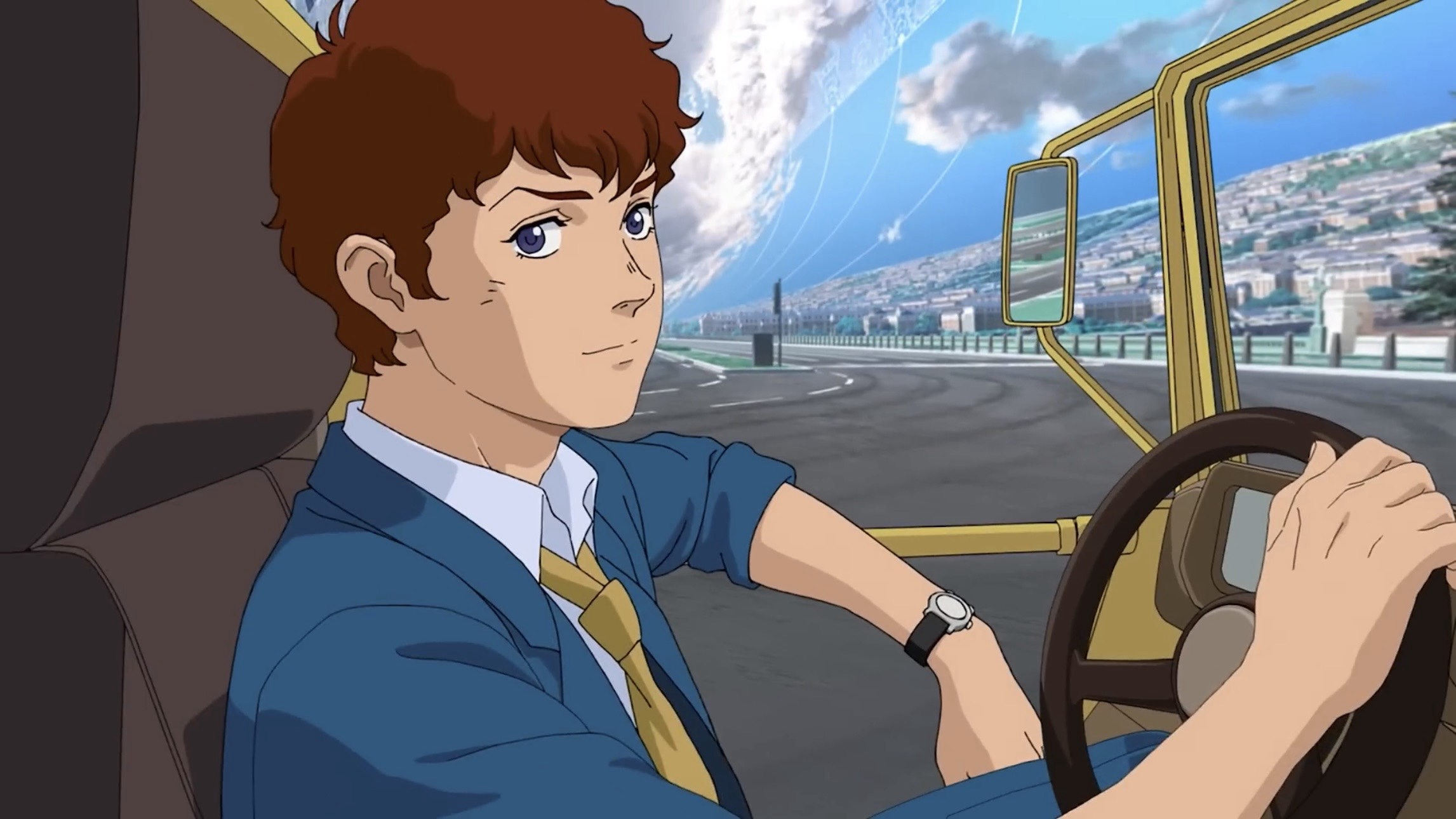
The very premise of Hathaway’s Flash, a young man leading a terrorist organization against the Earth Federation as a means of grappling with his guilt and unresolved war trauma, is inherently fascinating on its own. This is Hathaway’s “flash,” his brief yet deeply impactful tenure as a Gundam protagonist, rebelling not only against the corruption of the Earth Federation, but also against the expectations placed upon him by Amuro Ray, his parents Bright and Mirai Noa, and even the audience itself.
Hathaway Noa is not the heroic successor many expected him to become. Instead, he is a deeply flawed and traumatized man desperately trying to do what he believes is right, ultimately aligning himself ideologically with Char Aznable, the very antagonist of Char’s Counterattack.

However, much of Hathaway’s Flash’s true intrigue lies less in its political framework and more in the complex character dynamics and interpersonal drama that drive the story forward.

Hathaway and Kelia
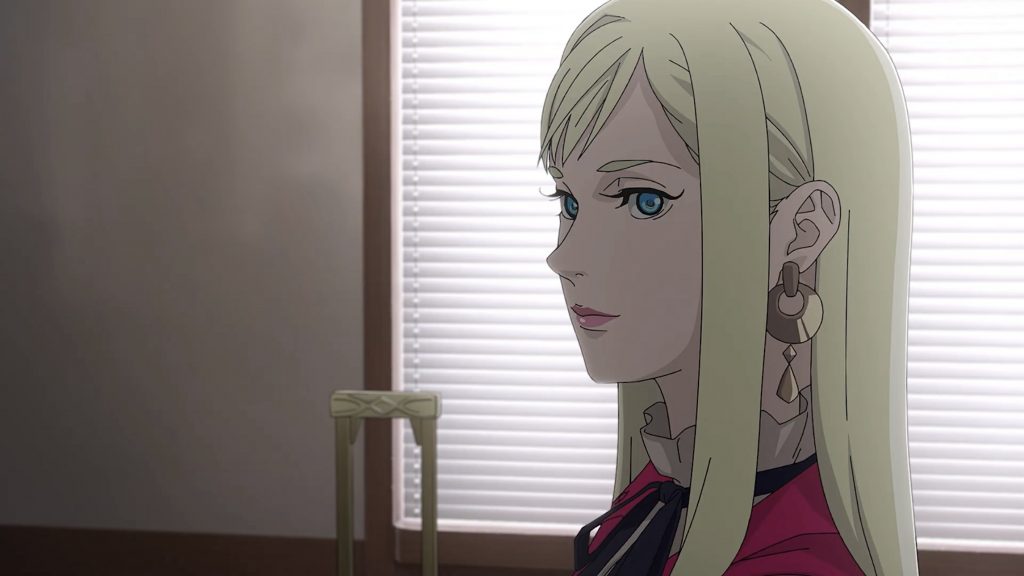
The central relationship of Hathaway’s Flash is between Hathaway and the mysterious, highly intuitive Gigi Andalucia. Hathaway becomes captivated by Gigi to the point of lustful obsession. As previously mentioned, to Hathaway, Gigi doesn’t merely carry the aura of Quess Paraya, she also embodies an almost unattainable, classical beauty far beyond what he believes someone like him deserves.
But there is one major complication. Hathaway is already in a relationship with Kelia Dace, a young woman he met during his botanical studies in Hong Kong, where the two also became involved in the anti-Earth Federation movement together. At the time, Hathaway was still struggling to process his experiences during Char’s Rebellion, and their relationship blossomed out of the comfort and stability Kelia provided during the darkest periods of his life.
The immense pressures of Hathaway’s role as Mafty Navue Erin, combined with his growing obsession with Gigi, drive a wedge between him and Kelia, leading to bitter arguments and their eventual separation. Kelia blames both Hathaway’s ideological fixation and his attachment to Gigi, but Hathaway himself is trapped in an impossible position. As the leader of a major anti-government terrorist movement, his life is dominated by the unbearable weight of responsibility. There is scarcely any room left for intimacy or normalcy.
In her own quiet act of rebellion, Kelia shaves her head bald, a common response to emotional stress, but also a symbolic gesture of renewal and detachment. It signals an attempt to reclaim control over her own identity and begin anew after being heart broken over Hathaway’s increasingly destructive path.
Gone are the days of their youthful and innocent love. What once began as a relationship between students and hopeful young idealists slowly deteriorates into something far more tragic: a woman left emotionally wounded by the man she loved, and a man consumed by a suicidal crusade, incapable of properly confronting the trauma, guilt, and emotional scars left behind by war.
Gigi and the Count
Gigi is a young courtesan associated with the powerful and elderly Count Cardeas Boundenwooden, though their relationship is depicted as far more nuanced than it first appears. Rather than something overtly lecherous, it comes across as a strange blend of pseudo-romantic companionship and grandfatherly affection, with the Count not only indulging Gigi in a life of luxury and abundance, but also imparting to her his philosophies on humanity, desire, and the nature of life itself.
Yet despite possessing everything one could seemingly want, wealth, privilege, and security, Gigi remains unfulfilled. Instead, she finds herself captivated by the tension, danger, and emotional chaos surrounding Hathaway and his rival Kenneth Sleg, two men standing on opposite ends of history as the fate of the Universal Century hangs in the balance.
Although Gigi laments leaving the Count behind, she genuinely believes that being alongside these two younger men is her destiny. While her relationship with the Count never feels controlling, there is still an underlying sadness to it. At one point, he admits he endures an entire year of suffering for a single day of happiness with her. Showered with money, luxury, and affection, Gigi resembles a rare and exotic bird kept in a gilded cage, now setting herself free.
Gigi’s past is intentionally left vague and undefined, outside of brief mentions of “daddy issues,” which adds another layer to her relationship with the Count. In that sense, her decision to leave the Count serves as her own act of youthful rebellion against a parental figure, rejecting the safety, comfort, and emotional dependency he represents in favor of uncertainty, passion, and self-determination.
Kenneth and Gigi
Kenneth Sleg serves not only as Hathaway’s ideological enemy, but also as his rival for Gigi’s affections. Kenneth is a man approaching middle age who desperately tries to preserve a youthful image through his flirtatious and promiscuous behavior, his vanity, and his attachment to a much younger woman like Gigi, beyond simply taking advantage of her luck and uncanny intuition.
Kenneth’s relationship with Gigi mirrors her dynamic with the Count. Both relationships are rooted in a kind of parental fixation and emotional convenience. Kenneth is too consumed by his own crusade against Mafty to truly give Gigi the emotional attention she desires, just as Hathaway becomes incapable of emotionally supporting Kelia due to his role as Mafty Navue Erin.
The parallel is intentional: two men driven by political and ideological warfare, unable to properly nurture the women beside them.
Lane
Lane Aim, the young Earth Federation ace pilot, may be the fourth-billed character in the series, but his role and narrative focus are comparatively smaller than that of the main trio. While Kenneth functions as Hathaway’s ideological rival, Lane primarily serves as his rival on the battlefield.
Lane is a Amuro-like naive idealist who acts as a foil to Hathaway’s Char-like role as a radical extremist. Although both recognize the corruption and failures of the Earth Federation, they stand on opposite sides of what justice should look like. Lane frequently comments on the distorted world created by adults and openly questions the methods and behaviors of his superiors like Kenneth.
Hathaway and Gigi
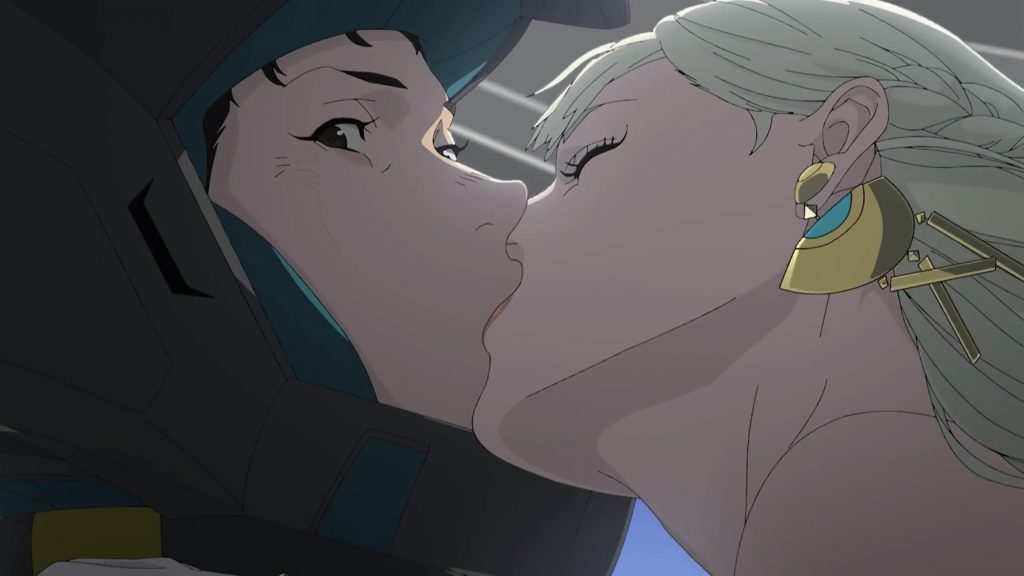
Hathaway leaves Kelia, while Gigi leaves Kenneth. The unlikely pair are finally reunited following a tense battle in Uluru. Much like their first meeting after the Haunzen hijacking, or when they privately shared coffee following the Davao raid, there is once again a calm after the storm. The two share a passionate kiss, and the second film comes to an end.
Hathaway and Gigi’s relationship echoes classic Gundam romances like Amuro Ray and Lalah Sune, or Kamille Bidan and Four Murasame. It is a chance encounter that exists beyond logic or reason, but something cosmic and fated. Yet Hathaway’s attraction to Gigi is inseparable from his lingering trauma and feelings surrounding Quess. Even when Hathaway finally attains what he has long desired, he hesitates. He is unable to fully embrace it or enjoy it immediately, burdened by doubts over whether he truly deserves it, or whether pursuing it is morally right after having just left Kelia.
Hathaway’s Flash is not a love story, nor is it simply a story about terrorism, even if both are central elements of the narrative. Ultimately, it’s a story about youthful rebellion: rebelling against a corrupt system shaped and maintained by adults, rebelling against toxic relationships built on convenience and emotional dependency, and rebelling against the expectations, ideologies, and failures inherited from the previous generation.
The series portrays love as awkward, messy, impulsive, and emotionally volatile rather than pristine or pure. In many ways, Hathaway’s Flash represents Yoshiyuki Tomino’s distinctly cynical vision of youthful revolt that came to define much of his work throughout the 1980s and 90s.

No Comment